Nb Iot Sim Card IoT SIM Cards Multi-Carrier Connectivity
In the rapidly evolving panorama of the Internet of Things, connectivity is crucial for the seamless functioning of gadgets and methods. Two principal technologies have emerged as key opponents: Wi-Fi and Low Power Wide Area Networks (LPWAN). Each has its own strengths and weaknesses, making them appropriate for different functions.
Wi-Fi is known for its high-speed knowledge transfer and widespread availability, making it a well-liked alternative for lots of smart gadgets. Its high bandwidth permits for the transmission of enormous amounts of information quickly, best for functions that require high information throughput. This could be significantly beneficial in environments like smart houses, where multiple gadgets may be streaming video or exchanging massive data files concurrently.
Iot Sim Card copyright IoT SIM Cards
However, the reliance on extra power-consuming hardware is usually a disadvantage. Wi-Fi units usually require a constant energy supply, which limits their use in functions where units must operate for prolonged intervals without frequent recharging or battery alternative. Smart sensors and gadgets utilized in agricultural fields or rural environments often encounter such limitations - Global Iot Sim Card.
LPWAN, however, offers a distinctive advantage in power consumption. Designed for low-power operations, LPWAN technologies allow devices to transmit data over long distances on very little energy. This characteristic makes LPWAN an attractive option for IoT use cases involving sensors that need to function in distant areas for prolonged durations.
The vary of LPWAN is one other compelling function, as it could cover several kilometers, even in rural settings. In contrast, Wi-Fi tends to have a limited range, typically encompassing several hundred meters. This is especially related in functions involving smart agriculture, the place sensors monitoring soil circumstances or crop health may be distributed over vast expanses of land.
While Wi-Fi is simpler to deploy, especially in city areas, the infrastructure required for LPWAN could contain more complexity. Companies may need to establish base stations or associate with community providers to ensure protection. This might deter some businesses from pursuing LPWAN, despite its advantages in vary and energy efficiency.
4g Iot Sim Card Global IoT SIM Card LOT 100

Security is another important issue to contemplate. Wi-Fi networks usually make use of sturdy safety protocols, however they can be more vulnerable to cyber threats compared with LPWAN protocols, which are usually much less widespread and subsequently less targeted. This can current a double-edged sword; whereas LPWAN could also be less susceptible to attacks because of its decrease visibility, its security mechanisms might not be as sophisticated.
Data latency can additionally be a noteworthy consideration. Wi-Fi usually provides lower latency in comparability with LPWAN, making it extra suitable for real-time applications the place quick data retrieval is essential, similar to video streaming or online gaming. For IoT applications that may tolerate longer information transmission times, such as environmental monitoring or utility meter readings, LPWAN may be satisfactory.
Scalability is an important side of commercial IoT. Wi-Fi networks can become congested as extra units are added, resulting in decreased efficiency. LPWAN, however, is particularly designed to accommodate numerous units over vast areas without substantial efficiency degradation. This makes it a suitable possibility for smart city functions, where thousands of sensors and gadgets must function concurrently.
Iot Data Sim Card IoT SIM Cards Cellular M2M Connectivity
The price factor can even play a big role in figuring out the best alternative for IoT connectivity. Wi-Fi installations can usually be cost-effective in smaller setups, but bills can rise considerably with larger deployments because of the need for additional entry points and infrastructure. Conversely, LPWAN's low working prices and long battery life may translate to important savings in intensive deployments.
Operational requirements range for both technologies. article source Wi-Fi requires a extra secure and dependable power supply, making it less appropriate for mobile IoT functions. LPWAN, with its energy-efficient design, can support gadgets in motion, corresponding to asset trackers in logistics or fleet management - Iot Sim Card Providers. This function extends its applicability to eventualities the place units have to transmit information whereas on the move.
Iot Device With Sim Card IoT Data SIM Card
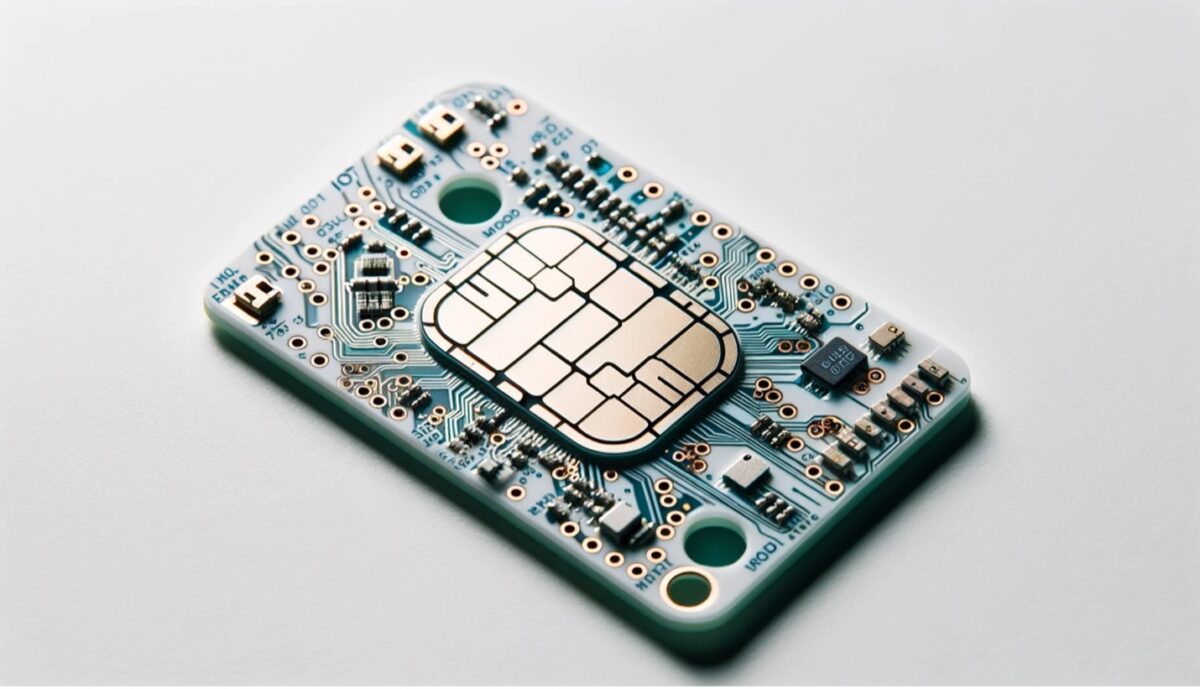
When addressing the particular use cases for IoT, it turns into clear that every technology has its personal perfect applications. Wi-Fi is particularly efficient in environments the place high-throughput and immediate response are essential. Settings corresponding to smart properties, commercial buildings, and urban facilities incessantly require the high-speed capabilities that Wi-Fi provides.
LPWAN excels in eventualities involving distant monitoring and low-frequency knowledge transmission. Use instances like agricultural monitoring, wildlife tracking, and smart metering are particularly suited to the strengths of LPWAN technology. Its capacity to increase battery life in low-power gadgets makes it a wonderful candidate for these purposes, where constant energy sources are not available.
Ultimately, the selection between Wi-Fi and LPWAN for IoT connectivity will depend upon specific project requirements. Evaluating factors corresponding to energy consumption, vary, data transmission needs, safety, and scalability might be important in making an informed decision.
As IoT continues to mature, hybrid options may emerge that seek to combine the strengths of each technologies. For occasion, a sensible city may deploy LPWAN for low-power sensors monitoring environmental situations, whereas using Wi-Fi for high-bandwidth applications like surveillance cameras. Such integrations may lead to more resilient and adaptable networks that cater to various requirements.
Global Nb-Iot Sim Card The Ultimate Guide IoT SIM Cards
The growth of IoT applications necessitates ongoing evaluation of connectivity options. With advances in both Wi-Fi and LPWAN technologies likely on the horizon, staying knowledgeable about their capabilities and limitations is vital to maximizing their potential in real-world applications. As industries continue to innovate, the dialogue between these two technologies will probably shape the long run connectivity landscape.
In conclusion, whereas Wi-Fi and LPWAN each hold distinctive benefits for IoT connectivity, the decision must be informed by practical concerns and specific application wants. The ability to adapt and select the best technology may significantly improve the efficacy and effectivity of IoT solutions in myriad sectors.
- Wi-Fi offers larger knowledge switch speeds, making it appropriate for applications requiring real-time information streaming, like video surveillance.
- LPWAN expertise focuses on long-range communication, enabling devices to attach over kilometers while consuming minimal energy.
- Wi-Fi networks can expertise congestion, especially in densely populated areas, doubtlessly leading to interruptions in connectivity.
- LPWAN is designed specifically for low-power units, allowing them to function for years on a single battery, ideal for distant sensor applications.
- Wi-Fi usually requires more frequent maintenance and safety updates, while LPWAN networks usually have lower administration overhead as soon as established.
- Scalability is a major advantage of LPWAN, as it can easily accommodate hundreds of devices in a single community with out important degradation in performance.
- Devices on Wi-Fi often require a stable energy supply, which limits their deployment in remote or hard-to-reach areas, while LPWAN options can function effectively in such environments.
- Wi-Fi helps higher frequency bands, which might lead to higher interference however gives it higher efficiency in short-range purposes.
- The price of deploying LPWAN can be lower in phrases of infrastructure, particularly for large-scale IoT networks, as fewer base stations are wanted for coverage.
- Wi-Fi standards are continuously evolving, providing new features, however this can sometimes result in compatibility issues with legacy gadgets, in distinction to the more secure LPWAN protocols.undefinedWhat is the main distinction between Wi-Fi and LPWAN for IoT connectivity?undefinedWi-Fi is a high-bandwidth, short-range connectivity possibility perfect for big amounts of information, while LPWAN (Low Power Wide Area Network) is designed for low-bandwidth, long-range communication, making it appropriate for remote IoT units needing minimal data transmission.
M2m Iot Sim Card Smart IoT SIM Cards
Which expertise is healthier for battery life in IoT units, Wi-Fi or LPWAN?undefinedLPWAN typically consumes much much less power, enabling battery-operated gadgets to operate for years, whereas Wi-Fi devices tend to empty batteries quicker due to their larger energy necessities.
Can I use Wi-Fi for large-scale IoT deployments?undefinedWi-Fi can be used for large-scale deployments, however it might face challenges like congestion and view it range limitations. LPWAN, then again, is designed for large-scale coverage and higher scalability in IoT applications.
Iot Sim copyright Everything about IoT SIMs
What forms of use circumstances are best fitted to LPWAN?undefinedLPWAN works nicely for purposes that require wide protection and low knowledge rates, such as smart agriculture, asset tracking, and environmental monitoring, the place devices may be deployed in remote places.
Is Wi-Fi enough for urban IoT applications?undefinedWhile Wi-Fi can serve city IoT wants, issues like interference and restricted vary may come up. LPWAN provides a extra reliable resolution for city functions needing intensive protection usually beyond a single Wi-Fi network range.
How does data transfer speed compare between Wi-Fi and LPWAN?undefinedWi-Fi usually provides high-speed data transfer charges appropriate for functions needing quick knowledge exchange. LPWAN presents lower speeds however compensates with greater coverage and better battery life for low-data-use circumstances.
Are there security concerns associated with Wi-Fi and LPWAN?undefinedBoth technologies have security considerations, but Wi-Fi is usually deemed more vulnerable to unauthorized access. LPWAN incorporates various encryption standards, providing security features tailor-made for IoT deployments.
Iot Sim Card South Africa Narrowband IoT SIM cards
Can LPWAN help real-time communication needs?undefinedLPWAN isn't designed for real-time purposes due to its lower information transfer rates and latency. Wi-Fi is more suitable for applications requiring immediate data exchange, such as video streaming or live monitoring.
What impact do environmental factors have on Wi-Fi and LPWAN?undefinedEnvironmental factors corresponding to partitions and interference can considerably affect Wi-Fi efficiency, limiting its vary. LPWAN is designed to carry out properly over longer distances and through various obstacles, making it more resilient in diverse environments.
Comments on “Sim Card Per Iot How regular SIM differs IoT SIM”